
Ask anyone who’s had to replace their outdoor patio set not once but twice in a decade and they’ll probably tell you the same story: their second set looked almost identical to the first. Same style, similar price tag, and roughly the same lifespan. The problem wasn’t the money they had to spend. It was the way they went about buying it. Most Aussies make their patio set purchase based on a gut feeling about how it looks and how many people they think it’ll seat, without ever really paying attention to the materials and construction that actually determine how long it’ll last. But those who manage to break the cycle of replacement are thinking about things differently right from the start.
The Seating Capacity Question Nobody Ever Helps You Answer
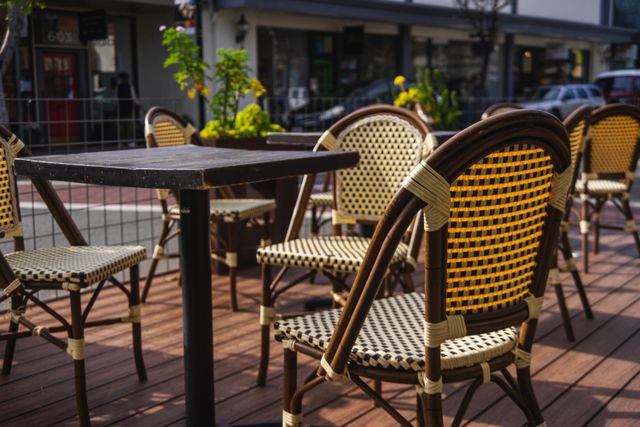
Usually when buying outdoor wicker patio sets, people make their decisions based on their wildest dreams of what they might need in the future. They imagine the biggest gatherings they might host and buy accordingly, then end up with a bunch of unused chairs taking up space and making the patio look cluttered instead of relaxed.
A more practical approach is to think about whether you’ll be using the patio set every day or just on special occasions. A three-piece bistro setting is perfect for two people on a small footprint, while a five-piece setting is ideal for four people on a modest patio; it even leaves a bit of room for one more. Only go for a seven-piece or bigger setting if your patio is genuinely used for entertaining groups regularly and you’ve got enough space to avoid dominating the area and taking away the sense of openness that makes the outdoor space so nice to hang out in.
The 900mm clearance rule is a useful guideline to anchor this decision. Essentially, you need 900mm of clear space behind each dining chair so people can get up and move around comfortably. Map that calculation against the actual space available before you buy and you’ll stop buying based on your dreams and start buying something that’ll actually work for you in real life.
What the Australian Summer Cycle Does to Outdoor Furniture And Why It Matters?
Australian summer is tough on outdoor furniture; we’re talking 40-plus degrees during the day and then a plunge to mid-teen temperatures overnight. This kind of temperature swing puts a lot of stress on the frames, finishes and weaves. And with UV Indexes regularly hitting extreme levels of 11 or above from October to March across most of Australia’s populated regions, the sun is also doing its best to destroy your furniture.
The materials all react pretty predictably to this stress. Steel frames develop rust at the edges and where the screws are, while low-density cushion foam gets squished beyond recognition within a couple of years. And if you’re using natural or UV-treated resin weaves, they tend to dry out and crack at the fold points long before the frame shows any signs of wear.
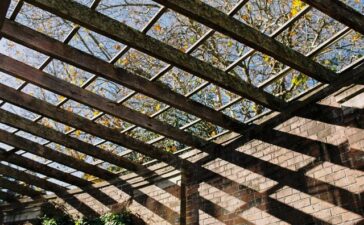
If your patio is out in the open without any protection from the sun, it’s going to be a lot tougher on your furniture than if it’s under a pergola. The key is matching the right materials to the actual conditions your patio is exposed to, rather than just going on some general ‘outdoor’ rating. It’s the difference between buying something that’ll last five years or something that’ll last fifteen.
Compatibility with the Patio Surface
Furniture stability on different patio surfaces is an aspect that does not usually come up at the point of sale. In the case of concrete and paving stones, glide feet made out of rubber or nylon protect the leg base and the surface from wear and moisture penetration into the leg base at the point where it touches the ground. When it comes to timber deck surfaces, similar principles apply while taking into account whether the glides will catch on deck joints.
In case of furniture set up on grass or decomposed granite surfaces, leg stability under load becomes an issue. Heavy furniture sets with narrow legs sink into the soft ground under the load of several people who sit down on them. Wide feet distribute the load evenly and avoid gradual sinking of the set which becomes uneven after some time.
Heavy concrete-look furniture sets for roofs or elevated decks may require discussion with a structural engineer or a building contractor before ordering, as the load is a considerable one, especially for a full seven-piece dining set with a sintered stone tabletop placed on a residential roof terrace.
Furniture Assembly and Points to Check Prior to Delivery
Installation of flat-pack furniture sets requires careful assembly of all joints where bolts have to be applied. Bolted joints not tightened completely produce joints with micro-movements under load, which lead to wear of adjacent weave and gradual weakening of joints.
Most important points of check upon delivery include quality of welding joints underneath weave surface, integrity of weave end-caps on armrests and feet, and uniformity of cushions’ colours which may differ between production batches. According to the Australian Consumer Law, any product which fails to meet acceptable quality standards within a reasonable time after delivery is liable for remedy irrespective of its warranty policy.
A fifteen-year-old patio set was purchased not because of the price, but because of the questions asked prior to the purchase.