
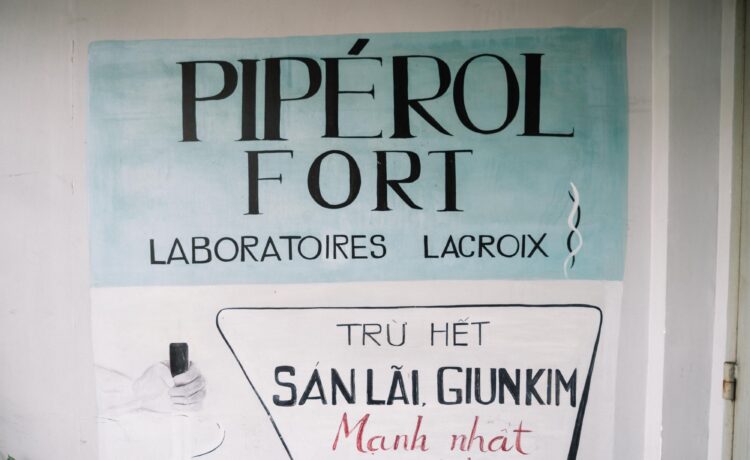
An example of the hand-painted soap advertisement in Kyneton can be found in the Victorian Heritage Register. In her essay on Melbourne’s painted signs, Leisa Clements claims that heritage records do not often include such types of advertisements. The discrepancy between people’s appreciation of such signs and the official protection of these items impacts each faded advertisement that can be seen on the old wall.
What The Register Actually Protects?
The Velvet Soap hand painted signage on Piper Street is included in the heritage register due to its technical and historical significance. According to the statement of significance, this sign is likely to be one of the last existing specimens of the particular type. Sign writer Edgar Hook’s name can be traced in the bottom-right corner of the sign. There are traces of the initial dark blue background under the brown painting, which reflects the evolution of the sign during various repainting periods. Heritage registration includes the front structure of the building as well as the lettering since protecting the wall allows saving the sign as well.
Neon In The Sky, Paint On The Wall
Unlike painted advertisements, neon signs belong to another tradition and the heritage register includes them separately. As for the Skipping Girl, the description highlights an essential set of signs reflecting the industrial heritage of Victoria in Richmond. Among other brands, there are Nylex, Victoria Bitter, Slade Knitwear and Pelaco. At present, the Skipping Girl sign is located at 651-653 Victoria Street, Abbotsford. Originally, the particular sign is known to be the first animated neon sign of Melbourne which appeared in another place in 1936 but was taken down in 1968. The heritage register notes that neither the sign nor the location is original.
Public reaction to the taking down of the sign was used by the author of the record as evidence of the sign’s social significance. As a result, the reproduction of the sign was made in 1970 after the people’s resistance to such a decision.
Why Does Old Paint Do So Much More Than We Think, Then Just Suddenly Vanish?

Stefan Schutt from Victoria University reckons that old paint, the kind made with linseed oil, has played a big part in keeping those old ads plastered on Ballarat’s buildings looking better than you’d expect for so long. And that’s because in the gold rush days there were loads of big brick buildings just begging to be plastered with ads, especially in the poorer areas of town which got less maintenance and fewer coats of paint. So as Michael Cuttle from the Ballarat Historical Society puts it, ‘all it takes is just one fresh new coat of paint to wipe the whole lot out’, just look at what happened to the Porridge Boy sign in Thornbury in 2009, a whole load of people worked hard to save it, but still the council went ahead and painted over it despite heritage studies flagging up just how important it was.
Where Does The Current System For Listing Heritage Falls Down?
Eve Clements reckons that painted signs just don’t fit neatly into the existing heritage rules, they’re not some standalone object you can shunt from one side to the other like you would a neon sign, and they’re not part of the actual building either. According to her, heritage records are getting a bit too hung up on the big architectural bits. Nick Gadd shares her view, he reckons the heritage rules really do need to be overhauled to get across just how culturally important painted signs are. That’s just what some researchers and reviewers think, however, not the official view of the Victorian Government.
Meredith Kasabian takes a bit of a different view on all of this. She’s an artist, with a bit of an obsession with painting lookalike ‘ghost signs’ just for the hell of it, and guess what? Signs that look distressed, like they’ve been there a couple of hundred years and then suddenly vanish, still seem to be really attractive to buyers, people just love that nostalgic feeling.
Why Are People So Obsessed With The Old Signs?
Psychologist Anthony Love reckons people’s fascination with old signs is more than just a form of escapism. For a lot of people, being attached to places is a big part of who they are, so losing a familiar sign can feel like losing a bit of themselves. No wonder we’re seeing all these petitions, walking tours and online groups cropping up to hunt down and record these old signs. And in Melbourne, in 2013 to be exact, they even had a global ghost sign conference, which was coordinated by Dr Schutt. But as far as the research has found, there’s no official headcount for how many of these old painted signs are still left, so be wary of anyone making claims about the numbers.
Councils Are Doing Their Part, Even Where The Register Can’t
The City of Port Phillip actually gets the importance of painted signs as a part of their commercial history and cultural heritage. They ask their residents (and visitors too) to take a snap of any signs they find and send the images through to their online portal. And if you spot a sign that’s been damaged or vandalised, you can report that too. The beauty of it is that this way, regular people like you and me can help document signs all over the area and add to the record.
The Skill That Goes Into Crafting A Painted Sign
For a sign painter, every single hand-painted letter starts with a sketch and some careful planning before they even pick up a brush. The surface of the wall, whether it’s smooth, ridged, curved or just plain uneven, affects how the paint behaves and how the lettering’s going to look. And if you’re going for gold leaf lettering, that’s another whole different ball game that requires even more skill. Phil Berry, a former sign artist quoted in Ballarat’s Courier, reckons he can spot the work of certain painters just by their unique styles.
Some businesses still choose to use hand-painted lettering because of the texture and look it gives their shopfront. And the best part is that painted signs can actually be repaired and extended by hand, which isn’t always the case with printed vinyl. Of course, a brand new painted sign won’t come with centuries of history, but it can start building its own legacy.
Finding one of these old painted signs on a Melbourne street can be a great way to help create a lasting record that goes way beyond the paint itself. Get out your phone, take a snap, note the address, and send the details to the local council’s heritage team. And before you start chipping away at that old wall to repaint it, do yourself a favour and check whether there’s an older sign hiding under the existing paint.